


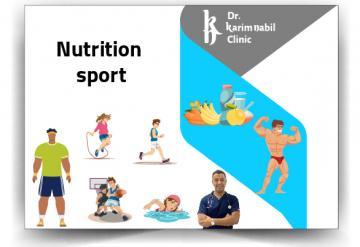
Athletes' diet is necessary for every athlete.
Each athlete has different nutritional needs of:
- Calories
- Vitamins
- Minerals
- Fluids
To exercise for a long time with high strength, every athlete needs to:
- Delay fatigue.
- Practical and healthy sports nutrition.
- Increase concentration.
- Enhance the body's immunity.
- Reduce the risk of infection.
Our goal is to provide athletes with the most efficient healthy nutrition to help them to increase their performance, maintain their athletic level in stadiums, and increase their ability to compete.
The scientist (Hara) set conditions for feeding athletes at the following points:
- Good nutrition must be integrated in quantity and quality (amount and type).
- proper nutrition should be diverse in terms of source and type.
- proper nutrition should be easy to digest and not to be overstated in its quantity.
- proper nutrition should be appropriate to the effort being made, according to the type of different activities, as well as with the training seasons as well as the climate in terms of quantity and type.
- proper nutrition must contain fats, carbohydrates, proteins, salts, vitamins and water.
- Therefore, we must confirm that nutrition is an important base for preparing any athlete in order to reach the optimal levels.
- Sports nutrition is based on purely scientific guidelines and studies that have been experimented over the years.
The most important of these guidelines is the dependence on quality, not on quantity and on the type of sporting activity. Each sport has different nutrition than the other, as the type of food for races (long distances, which mainly depend on carbohydrates) is different from feeding for races (short distances, which depend mainly on protein), meaning that the nutrition for races Endurance is different from feeding to speed racing.
- And we emphasize that nutrition depends on quality not on the quantity, it is the contribution of carbohydrates, fats and protein to different levels of energy production, and for this the athlete must eat (55% to 60%) of carbohydrates and (25% to 30%) of fat and (10% to 15%) of protein in its diet.
- The nutritional systems for athletes must be through a doctor who is specialized in this, and also it is the responsibility of the player.
Taking the advice of the specialist doctor and implementing it prevents malfunctions, severe
- surgery is a contributor for you to lose extra weight, beside dietary system and post-surgical instructions.
- After the surgery, you have now controlled the size of your stomach. It is you who control what goes into your mouth in order to prevent complications and any deficiency that may happen to your daily needs of micro and macro nutrients to maintain your health and to help you lose and maintain weight.
- After obesity operations, the person must stick to a specific diet made by the specialist doctor to protect you from indigestion or malabsorption.
Diet goals after obesity operations:
- Get used to eating small amounts of food and it should be easy to digest and safe for you.
- keep losing weight and never return to weight gain again.
- Allow the body to adapt to the surgical changes in your stomach, by enhancing the healing process of the stapling line without stretching your stomach by food.
- The most important goal is to avoid side effects and complications.
Among the most important general guidelines after obesity surgeries:
- Maintain a daily stable diet for your calories, and protein intake.
- Eat balanced small meals.
- Eat slowly and chew well with small bites of food.
- Sugar, foods, sugary drinks, and concentrated sweets should be reduced, especially in the first two months after the operation.
- You should not drink soft drinks and ice cream, as they may cause air to enter the stomach, leading to complications.
- Daily calorie intake should be determined by the nutritionist and must be adhered to.
- Are you a patient with pressure and medications with you failed to control your pressure?
- Are you pregnant now, congratulations with the nutritionist, you can maintain the appropriate rate of weight gain while maintaining your health and the health of the fetus.
Are you sick with one of the following diseases?
- Diabetes Mellitus.
- Eating disorders and food allergies.
- Cancers.
- Chronic obstructive pulmonary disease.
- Digestive disorders.
- Immune system disorders.
- Genetic disorders.
- Involuntary weight loss.
- kidney disease.
- Osteoporosis.
- Ulcers.
If the answer is yes, you need an appropriate diet and you must make sure the diet is appropriate to your health condition and does not include harmful nutrients or lack any of the essential ones.
nutrition has a role in the treatment of chronic diseases such as the DASH diet in the treatment and controlling high blood pressure diseases.
- Therapeutic feeding
Food is not limited as nourishment for the body, everyone knows that the nutrients in the food are necessary for human development and for carrying out various daily activities.
But do the food benefits stop here? Or do the benefits go beyond this to become a way to prevent or treat many chronic diseases?
Food itself is a drug and a mean of treatment, so taking advantage of the nutrients present in the food is essential in treating many diseases and overcoming many health problems and their prevention, and sometimes they are the only way to treat them.
In order to get the most benefit from therapeutic diets to overcome chronic diseases, a proper diet made by a nutritionist must be followed.
The nutritional doctor is the one who can develop a therapeutic nutritional approach for treating medical diseases and related symptoms, based mainly on the patient's medical and psychological history, in addition to medical examinations and the patient's diet history.
Make a reservation to be able to benefit from the quantity and quality of your food, and to be able to fulfill your daily nutritional needs.
What fits you, deos not fit others, remember that.
Many people suffer from obesity and overweight, and this makes them unable to lead a normal life, which increases their chance of developing serious diseases.
How to measure obesity degree?
- Obesity is measured in several different methods, but the most important one is the measurement of the body mass index, in which the weight of the body is calculated in relation to height.
- The doctor diagnoses obesity if the BMI reaches or exceeds 30.
- There are modern devices that now enter the type, age and length, and the device gives you an index of the body mass with an indication of the locations of the distribution of body fat and the proportions of fats, bones, and muscle mass.
The most important causes of obesity
- Following unhealthy lifestyles, with low levels of physical exercise.
- Genetic reasons.
- Pathological causes.
- Eating large quantities of food which exceeds the needs of the body, and this always happens when a person is present among a group of those who eat large quantities of food.
- Drink large quantities of drinks with artificial sugar added, such as soft drinks, as well as all processed and abnormal juices.
- Getting used to eating outdoors, such as restaurants food and fast food, as they often have very high calories, as these meals are always rich in saturated fat and sugars.
Treatment methods to get rid of obesity
- The goal of treatment is to get rid of obesity by reducing calories, eating a balanced and healthy diet, and engaging in regular physical activity.
- The nutritional physician establishes an appropriate and nutritionally balanced program with low calories.
- The weight loss must be gradual until the patient feels better and responds to treatment, and his health begins to improve.
- You should talk to your nutritionist openly so that he can change your thoughts about food and eat it.
- The method of losing weight varies according to each person, as it depends on several factors, including the health and extent of the patient's desire to lose weight and the level of obesity.
- The doctor may have to prescribe some medications to help with the diet in weight loss diet, such as orlistat that reduces the body's absorption of fats or some drugs that suppress appetite and restrain it, and thus reduce weight or increase the rate of burning.
- Surgical treatment of obesity
Some people resort to surgeries to lose weight, as it reduces what the stomach can have, and there are other surgeries that prevent the body from absorbing calories from food, and because of the seriousness of theses surgeries, they are prescribed only for obese people, including:
- Gastric bypass surgery.
- Gastric band.
- Sleeve gastrectomy.
- Avoid obesity through a healthy lifestyle
You can avoid obesity and avoid its complications by following a healthy lifestyle with a nutritionist and diet programs to eat a healthy, balanced diet.
- Doing regular physical activity for a period of two and a half hours to five hours per week.
- Monitoring the weight on a weekly basis allows you to get acquainted with the results of the followed diet, and its success.
- The success of any weight loss diet prescribed by your doctor and the prevention of obesity requires commitment to the steps all the time to reach long-term success and not gain weight again.
And to get rid of obesity or thinness problems and be ready to regain your fitness and physical fitness
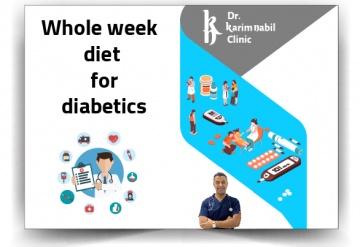
Whole week diet for diabetics
| The days | Breakfast | Lunch | Dinner |
| The first day |
Quraish cheese and toast |
Grilled chicken breast with green salad |
Salmon salad or tuna with white beans |
|
The second day |
Eat apple pie with oatmeal, with Greek yogurt |
Tilapia fish with lemon and green salad |
Turkish rolls with berries or cherries |
|
The third day |
Make an integrated meal of fruit smoothie, consisting of berries and almond milk, and you can add some yogurt and honey |
spinach and oatmeal pastry with grilled beef burger |
Quraish Cheese Salad |
|
The fourth day |
vegetables with sliced goat cheese or cottage cheese |
crunchy chicken salad add roasted or grilled chicken in the oven with fresh vegetable salad, with the addition of lemon, spices and a little salt |
red meat without fat and cook without oil |
|
The fifth day |
Dried fruits, nuts and seeds |
beef stuffed with pepper |
Quinoa and tabbouleh |
|
The sixth day |
Muffins, bananas, carrots, and bacon / nuts |
soup with chicken breast |
Hummus Al-Sham Salad with Yogurt Cup |
|
The seventh day |
slices of fruit and toasted whole wheat bread |
Grilled shrimp with basmati rice |
vegetable soup |
Click here to book now and follow up with a nutrition specialist, Dr. Karim Nabil
 English (United Kingdom)